
How to Zone a Florida Garage
Zoning is the difference between a garage that stays organized and one that looks tidy for a month. Here is how to divide the space — and why in Northeast Florida the climate should decide which wall gets what.
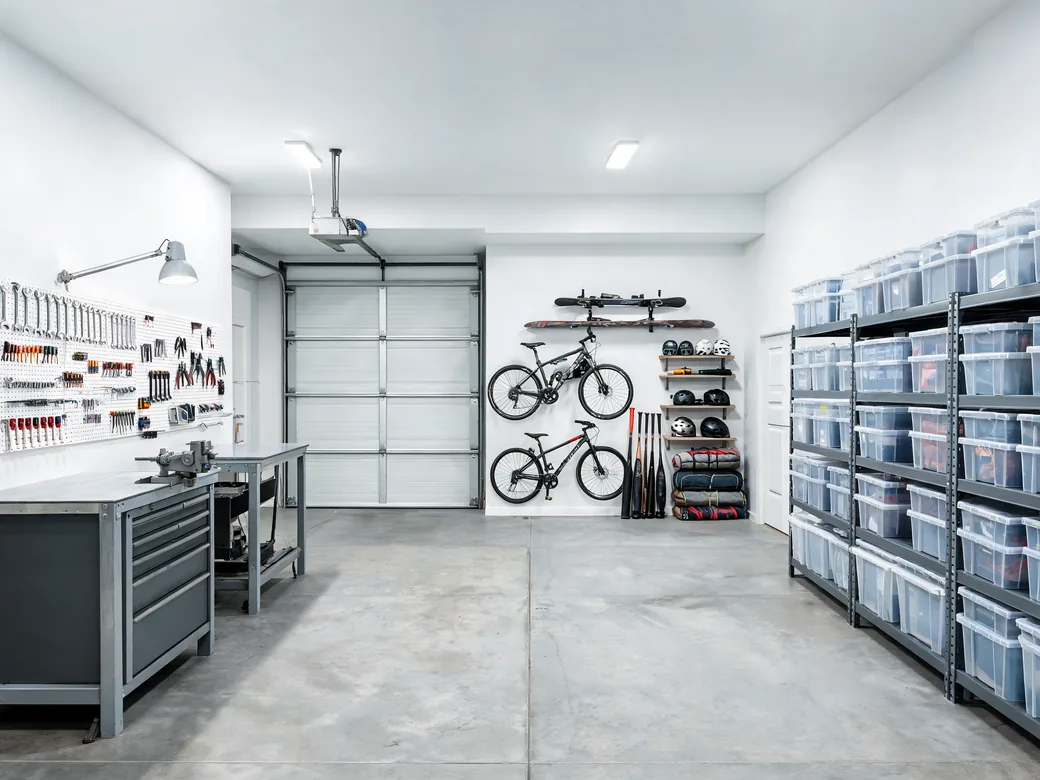
What zoning actually means
Zoning means every category of thing you own has one obvious home, and that home is chosen deliberately rather than by whatever was carried in first. It is the single reason some garages stay organized for years and others revert within a season.
The test is simple: if someone else in your household puts something away without asking, do they put it in the right place? If the answer is no, the garage is tidy but not zoned, and tidy does not survive a busy month.
The five zones most Northeast Florida garages need
Almost every garage we work in resolves into the same five, in rough order of how often they get touched:
- Daily and weekly — the things that leave the house constantly. Sports bags, dog leads, beach chairs, the recycling. Nearest the interior door, at adult and child reach height.
- Yard and lawn — mower, trimmer, blower, rakes, fuel. Needs floor or wall space near the garage door, because it goes in and out whole.
- Tools and workbench — the zone most damaged by getting this wrong, for reasons below.
- Recreation and water gear — kayaks, boards, bikes, fishing tackle. Bulky, awkward, and the biggest beneficiary of wall and overhead storage.
- Seasonal and archive — holiday bins, keepsakes, luggage. Touched twice a year, so it earns the worst-access space in the room: high shelves and overhead racks.
Most garage problems are a zone-ordering problem rather than a volume problem. Holiday bins at eye level and the everyday sports bag buried behind them is the classic version.
Where Florida changes the plan
This is where generic garage advice stops being useful. A garage is the least climate-controlled room in the house, and in a humid subtropical climate that has a specific consequence: hot afternoons followed by a cooler night leave condensation on every metal surface in the room. Homeowners across Jacksonville and St. Johns County report tools, hardware and equipment corroding in garages that have never taken a drop of rain.
So zoning here is not only about frequency of use. It is also about which wall is coolest and driest, and that wall should be reserved for the tool zone rather than filled with whatever needed a home first. A shared garage wall with the house is usually a better bet than the exterior wall that bakes all afternoon.
Two more Florida-specific rules follow from the same physics. Bulk plastic bins tolerate the hot ceiling space far better than anything metal or paper, which makes overhead racks the right home for seasonal storage and the wrong home for tools. And anything that comes home wet — boards, wetsuits, tackle, beach gear — needs somewhere it can dry rather than being sealed damp into a closed bin, which is how mildew starts.
Closer to the ocean the effect compounds. In Ponte Vedra Beach and Atlantic Beach, salt air, humidity and strong UV accelerate corrosion further still, and coastal homes weather faster than inland homes of the same age. Keeping corrodible items off the door line, where wind-driven salt reaches furthest, is worth doing deliberately.
Zone by frequency, then by category
When two rules conflict, frequency wins. A category used weekly beats a category that is merely related. Kids’ sports gear belongs near the door at child height even though it is “recreation” and the kayaks are recreation too — the kayaks go overhead because they move four times a year and the soccer bag moves twice a week.
The practical version: walk the garage and ask of each group, how often does this leave the room? Daily and weekly items get prime wall between waist and shoulder height. Monthly items go higher or lower. Twice-a-year items go overhead or in the far corner. Almost every layout mistake we correct is a frequency mistake wearing a category costume.
Three mistakes worth avoiding
- Buying storage before zoning. Shelving bought to fit a wall rather than a plan usually ends up holding the wrong things in the wrong place. Decide the zones, then buy to fit them.
- Floor-standing shelving in a small garage. In tighter garages — common in St. Augustine’s older housing stock and in Atlantic Beach — a shelving unit can consume more usable space than it creates. Wall and overhead systems usually beat it.
- Labeling by contents instead of category. A bin labeled “Christmas lights, tree stand, spare bulbs” is wrong the moment anything changes. “Holiday” stays right for years.
Zoning is the core of two of our packages. Both start with a free on-site estimate.
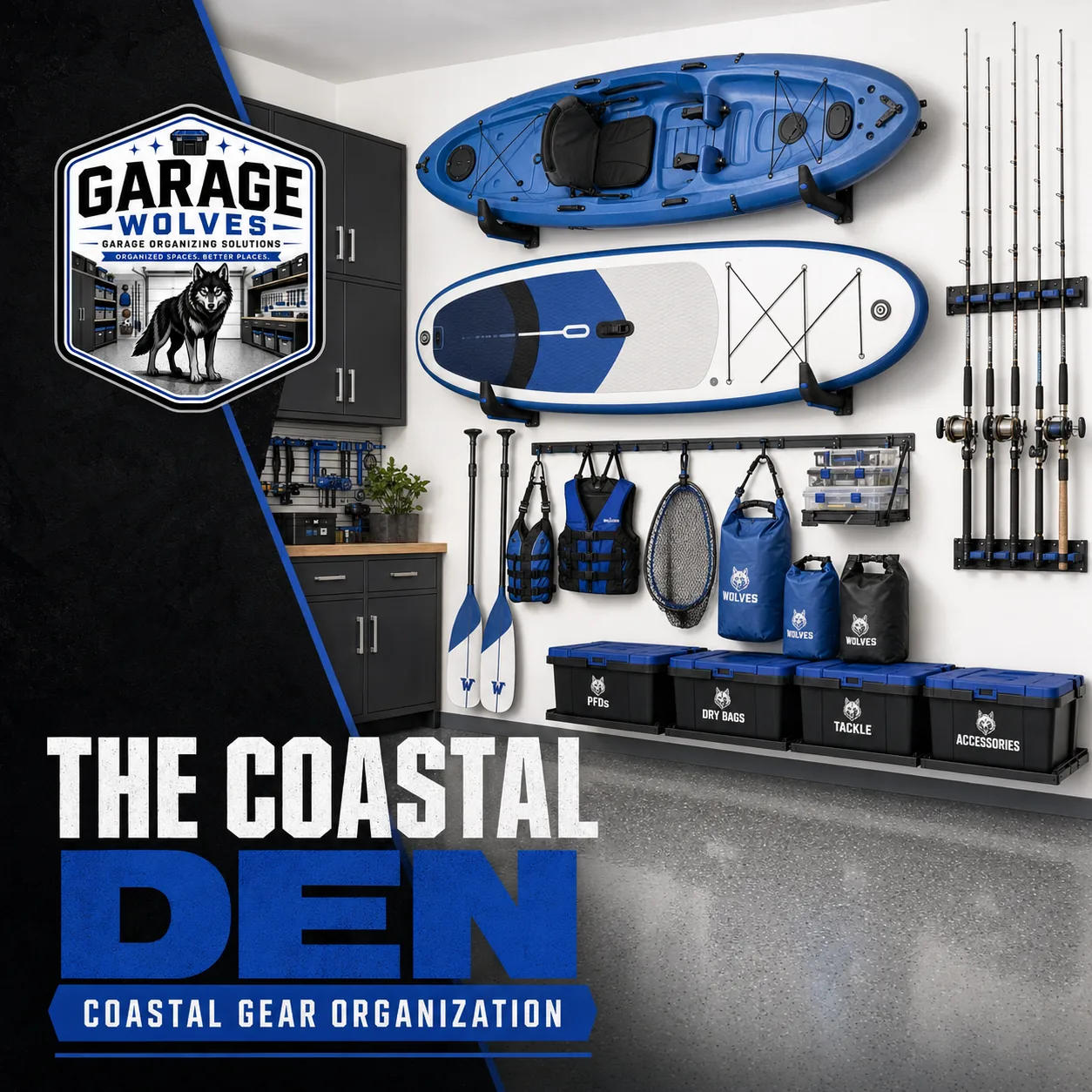
Fishing, kayak and paddleboard gear zoned and stored off the floor.
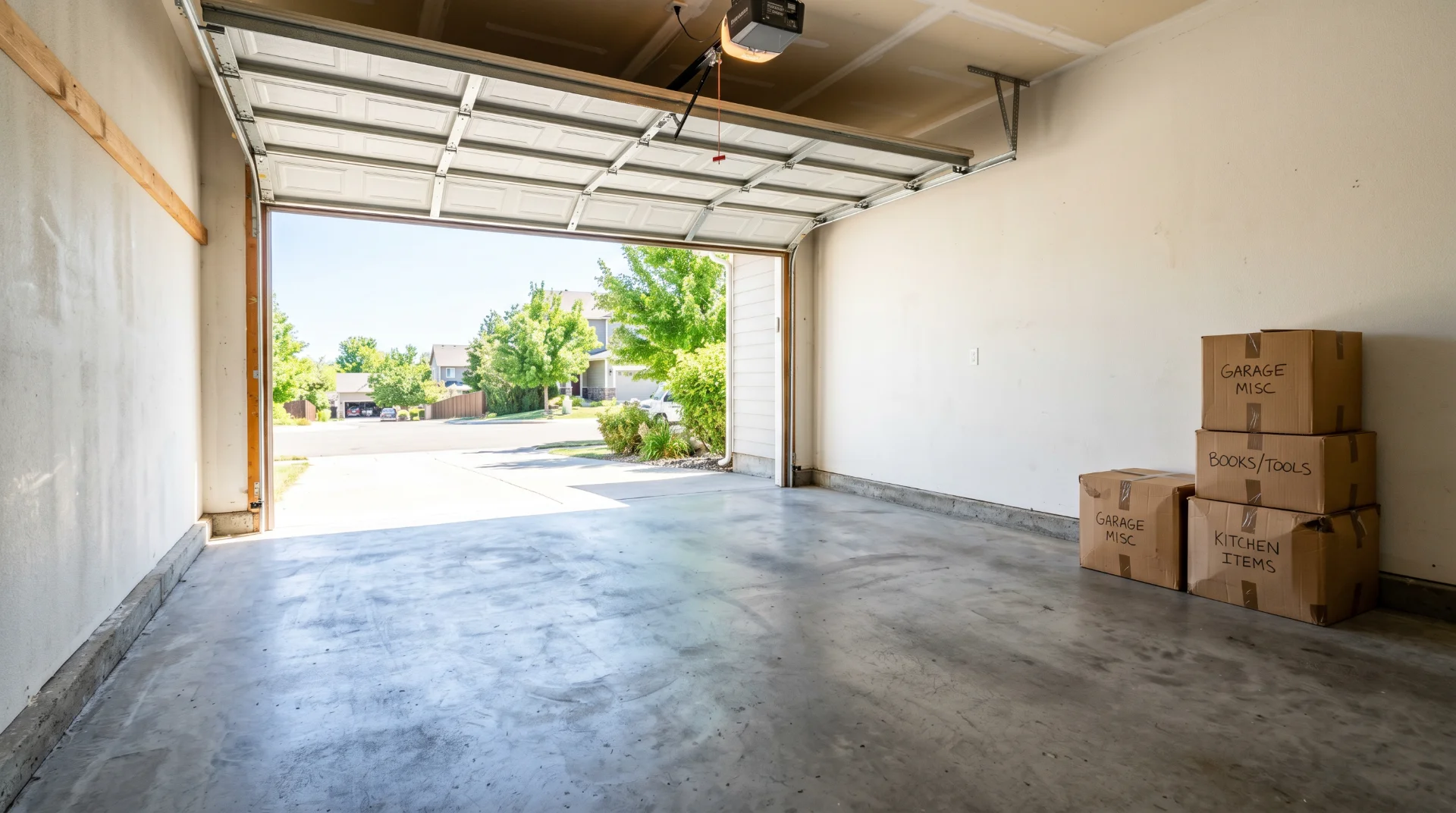
A fast, judgment-free reset for a lightly cluttered garage.
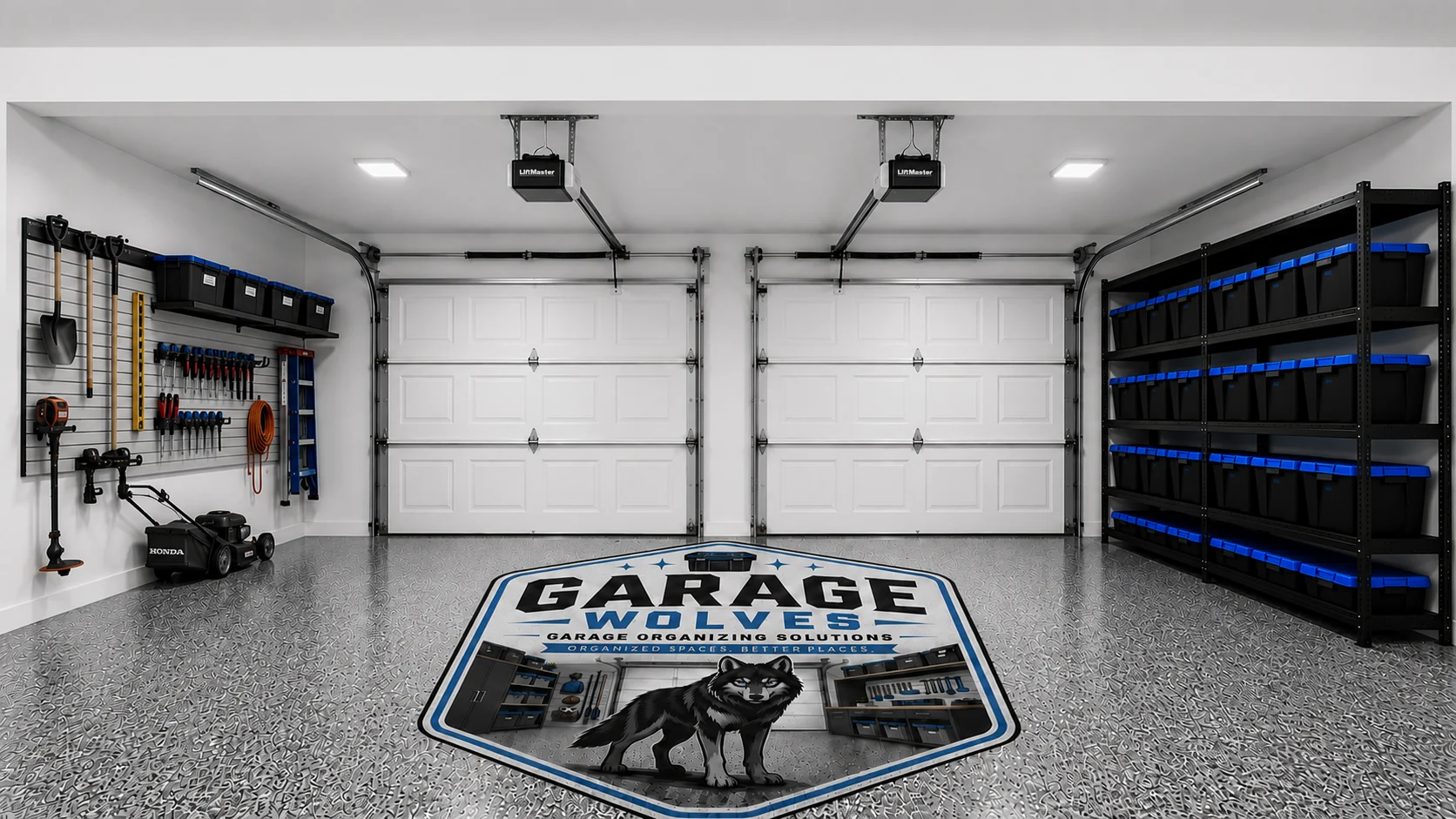
Full zoning, layout and labeling for busy family garages.
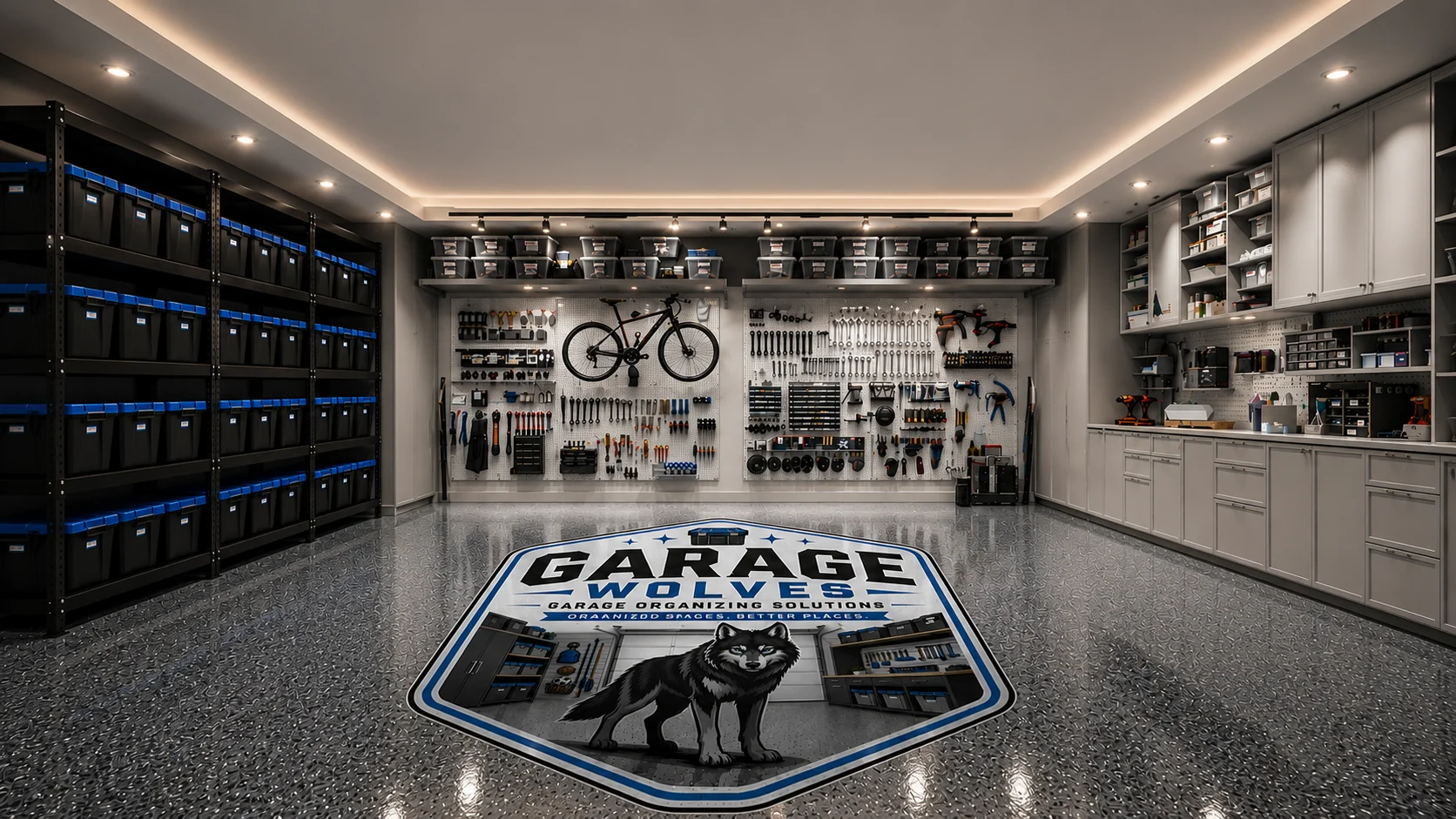
Complete overhaul — custom layout, wall and ceiling racks, premium bins.
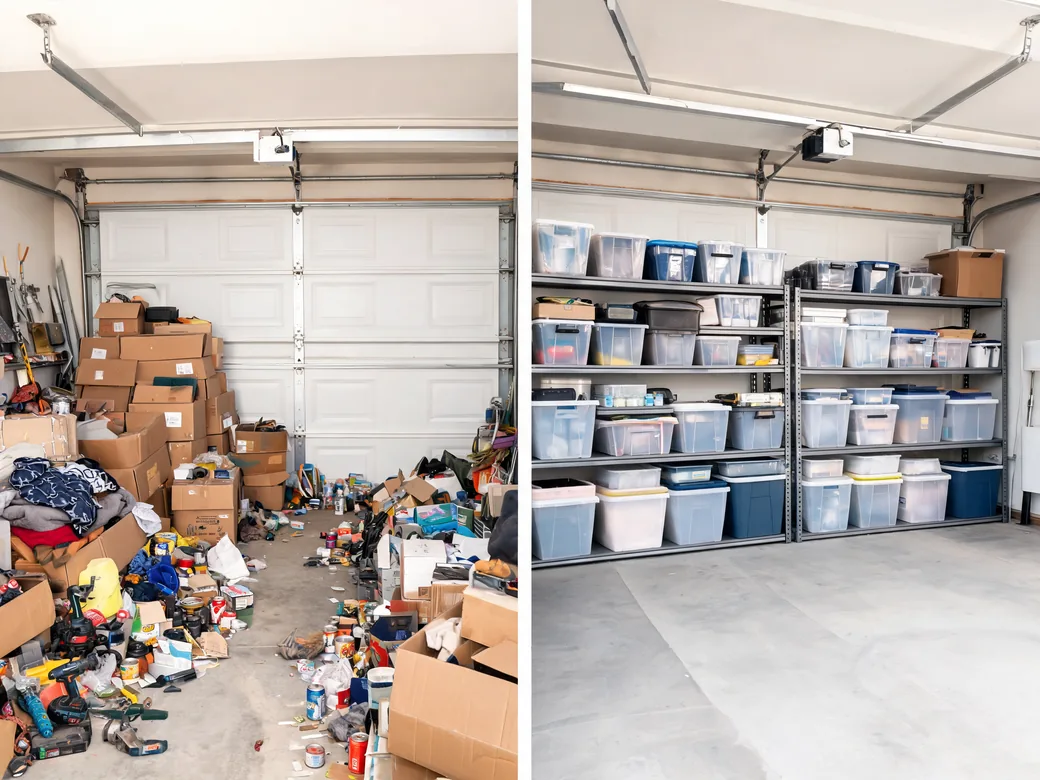
What Actually Changes in a One-Day Garage Transformation
An honest hour-by-hour account of what fits into a single day — and what before-and-after photos never show.
Read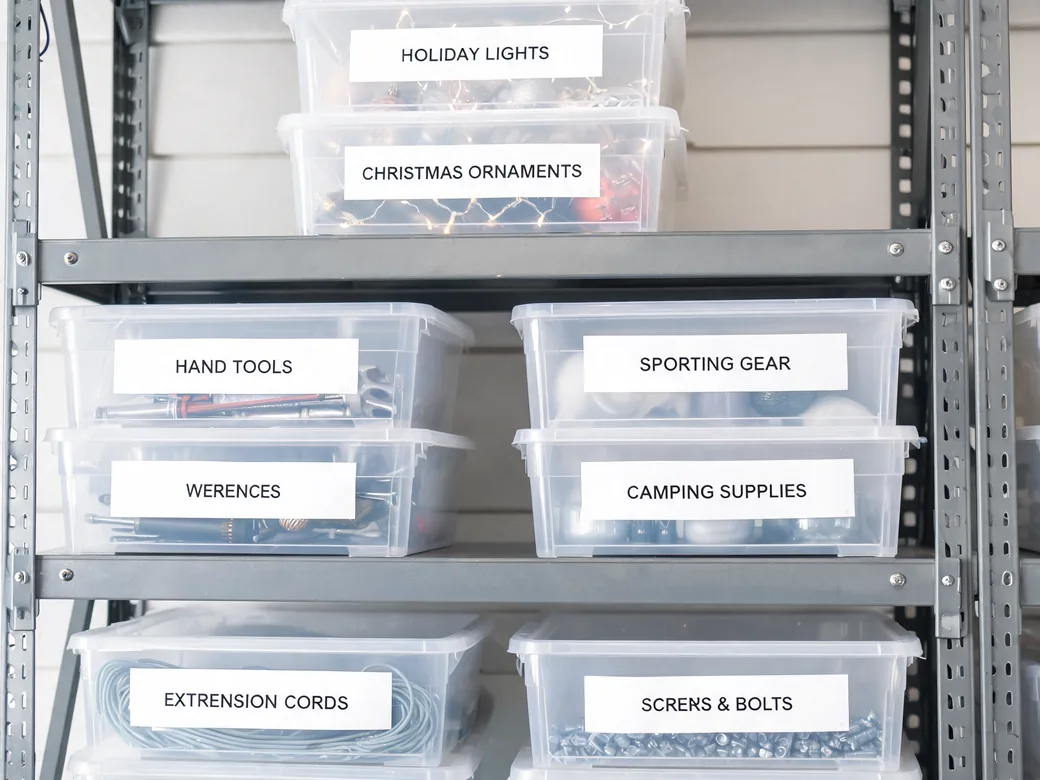
Why Labels Peel in Florida Garages — and How to Label Bins So They Don’t
Adhesive fails fast in a hot, humid garage. What actually holds up — and how to label bins so the system survives the labels.
ReadWant it done for you?
Free on-site estimate anywhere in St. Johns, Duval, Clay and Flagler Counties, with a fixed scope and price before any work starts.