
Three-Car Garage to One-Car Garage — What It Takes to Fit It All In
A customer downsized from a three-car garage to a one-car garage and assumed most of it was going to have to go. It didn’t. Here is what actually makes that possible, and what she said about it afterwards.
Christina L. Read it on FacebookWe recently downsized from a three-car garage to a one-car garage and had no idea how we were going to fit everything into such a small space. Shaunn came up with creative, practical solutions that completely transformed our garage and helped us free up valuable floor space when we honestly didn’t think it was possible.
He installed fishing rod holders, wall-mounted storage racks, and overhead ceiling racks, and the difference is incredible. His pricing was very reasonable, his workmanship was excellent, and he left everything clean when the job was finished.
If you’re looking for someone to maximize your garage space, I highly recommend Shaunn. We’re extremely happy with the results!
Downsizing the house is the easy part
Moving to a smaller home forces a decision about furniture, and people make it. The garage is different, because nothing in it announces itself. Nobody looks at a three-car garage and sees three rooms of storage — it just looks like a garage with some space left over.
Then the truck arrives at the new house and the arithmetic lands all at once. The floor plan lost two bays. The contents didn’t lose anything. That is the position Christina’s family was in, and the honest first reaction — no idea how any of it was going to fit — is the one almost everybody has.
What usually follows is a purge, done under time pressure, in the heat, against a moving deadline. It works, in the sense that the boxes eventually fit. It also tends to remove things people wanted to keep, because floor space is the only variable anyone is thinking about.
The space you lost is not the space you have to replace
A single-bay garage has far less floor than a three-bay garage. It has proportionally much more unused wall and ceiling, because in a big garage nobody ever needs to use them.
That is the whole move. A typical garage in Northeast Florida has eight to ten feet of clear height, and almost all the storage in it sits in the bottom three. The band from roughly waist height to the ceiling is the largest untouched volume in most houses, and it is free.
Using it changes what the room can hold without changing what the room is. Bikes, coolers, holiday bins, camping gear and long items like rods and paddles do not need floor — they need a fixing point. Once those go up, the floor is left for the things that genuinely have to be on it: the car, the trash cans, the mower.
It is also why we push back when someone asks us to start by deciding what to throw away. Decluttering is part of the job, but it is the second question. The first is how much of what you own never needed to be on the ground.
What went in on this one
Three things, all of them mounted, none of them taking floor.
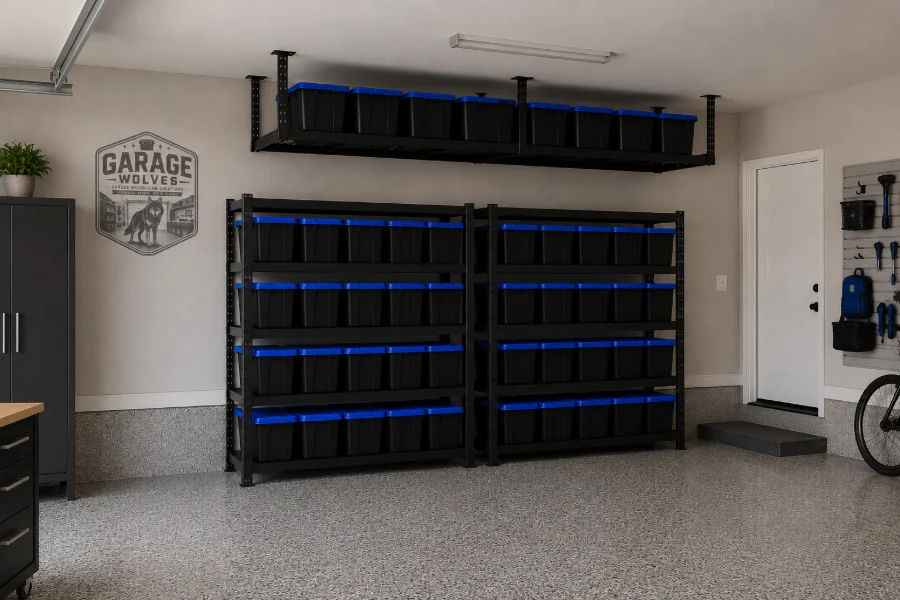
- Overhead ceiling racks. The single biggest win in a downsize. Ceiling racks recover the volume above the car, which in a one-car garage is otherwise dead space for the life of the house. Seasonal bins, luggage and anything touched twice a year belongs up there.
- Wall-mounted storage racks. Shelving fixed to the studs rather than free-standing units resting on the slab. Free-standing shelving eats its own footprint and wobbles; wall-mounted racks give the same shelf area and hand the floor underneath back.
- Fishing rod holders. Rods are the awkward case — long, fragile, impossible to stack. Leaned in a corner they take the corner and still get stepped on. Held horizontally along a wall at height they take almost nothing and stop being a hazard.
None of that is exotic. What makes it work is deciding the layout before anything gets drilled — which wall takes weight, which one gets the sun, what has to stay reachable without a ladder, and where the car door actually opens. Get that wrong and you have a well-built system in the wrong places.
If you are about to do the same thing
A few things worth knowing before the move rather than after it.
- Measure the height, not just the footprint. Ceiling height — and whether the opener and door track leave room for a rack — decides more about capacity than the floor dimensions do.
- Find the studs and the joists first. Everything carrying real weight has to hit structure. In a garage with a finished ceiling, confirm that before you buy racks, not while you are holding one.
- Do the cull once, with the plan in front of you. Deciding what goes is far easier when you already know what the room will hold. Most people over-purge because they are guessing.
- Rigid bins, not cardboard. In this climate a cardboard box in an unconditioned garage is a temporary container regardless of what is in it — and it is worse overhead, where a soft box is a genuine problem. More on that in why labels peel in Florida garages.
- Leave the sun-facing wall for what can take it. The wall that bakes is not where paint, electronics or anything with a label should live.
If you would rather have the layout decided for you, that is the substance of zoning a garage — and it is the part that determines whether the room still works a year later.
The line in the review we care most about
Not the pricing, and not the racks. It is “he left everything clean when the job was finished.”
Installing storage makes a mess. Drilling into a ceiling puts dust over the whole floor, and every rack arrives in a box. Handing that back to the customer at the end of the day is a real cost saved by whoever did the work, and it is invisible in the quote. Cleanup is part of the job here, on every package, and it is not something you should have to ask for.
The other half of that is scope. Nobody should be surprised by a number at the end. Scope and price are fixed before anything moves, which is what “reasonable pricing” means in practice — it was agreed before the first hole was drilled.
Wall racks, ceiling racks and specialist holders go in as part of these packages, or on their own as a storage installation.

Fishing, kayak and paddleboard gear zoned and stored off the floor.
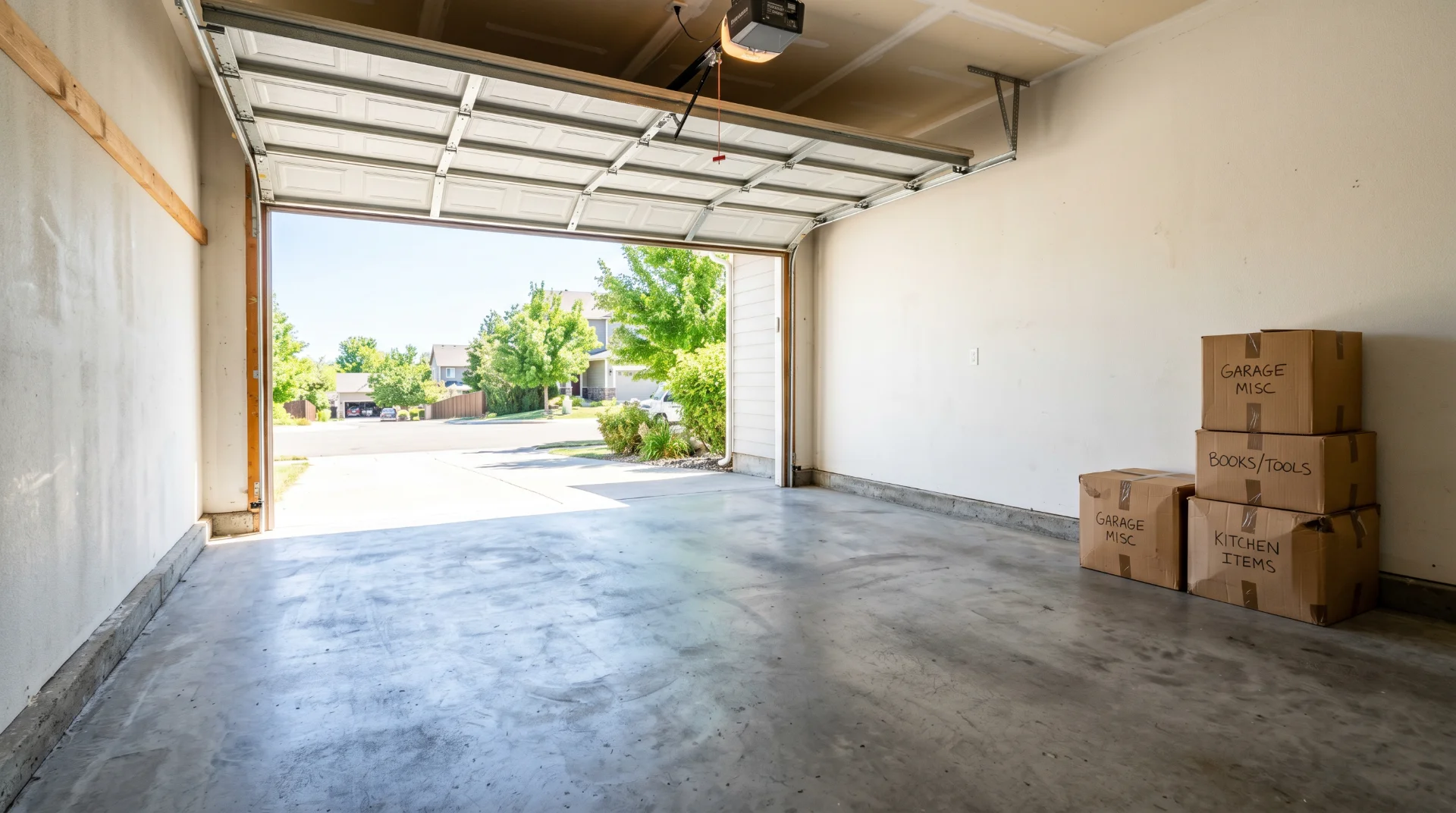
A fast, judgment-free reset for a lightly cluttered garage.
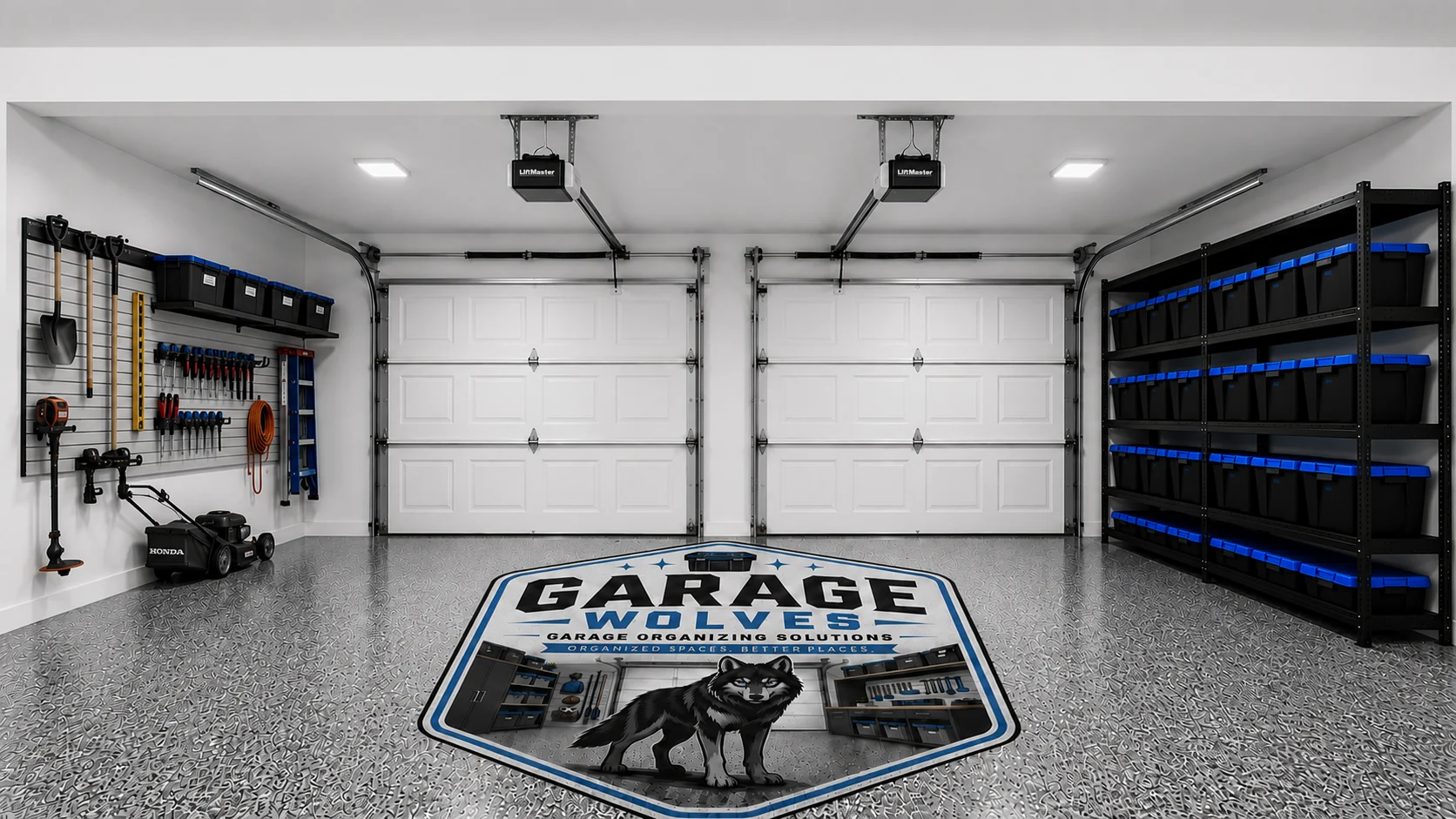
Full zoning, layout and labeling for busy family garages.
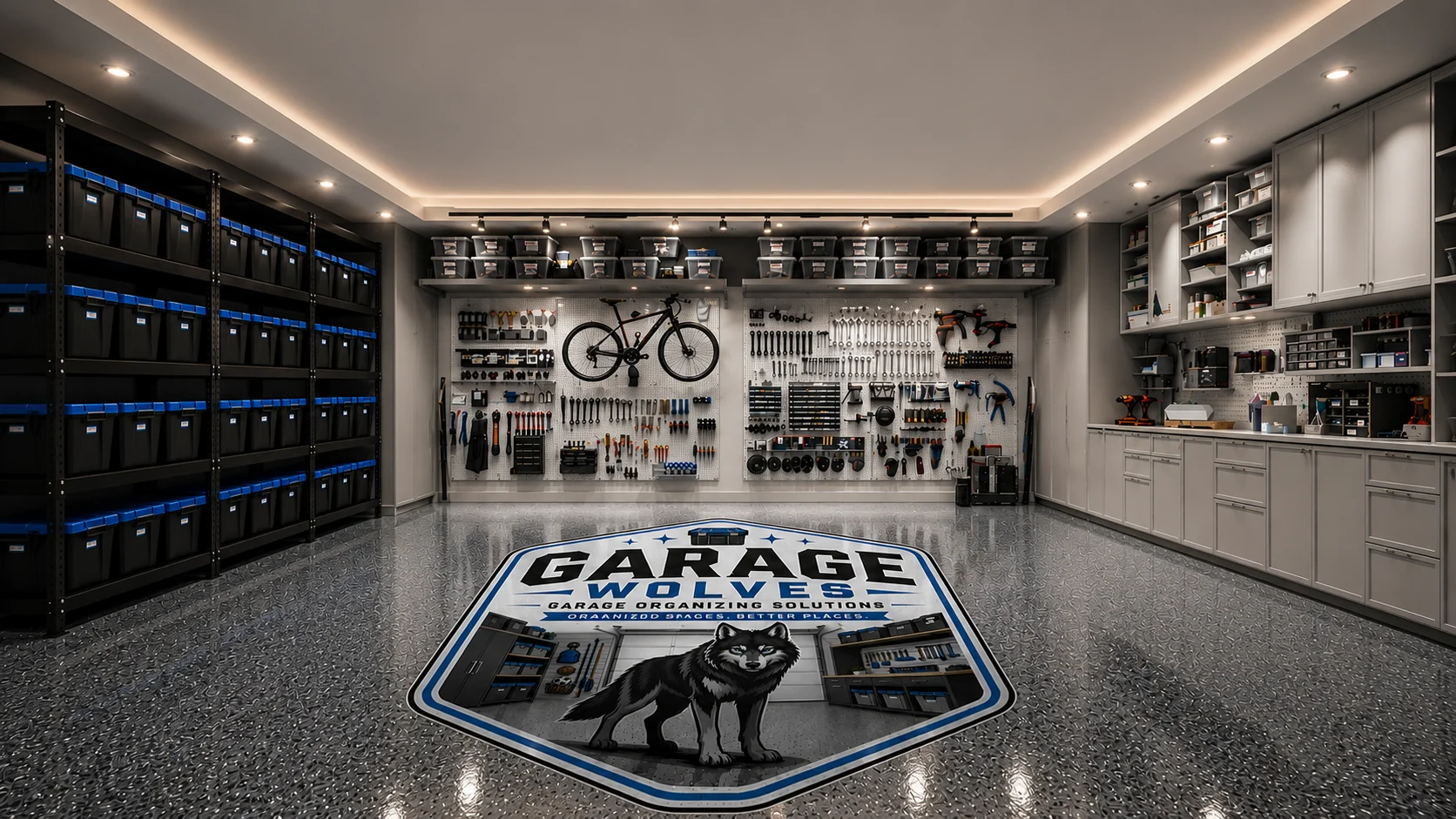
Complete overhaul — custom layout, wall and ceiling racks, premium bins.
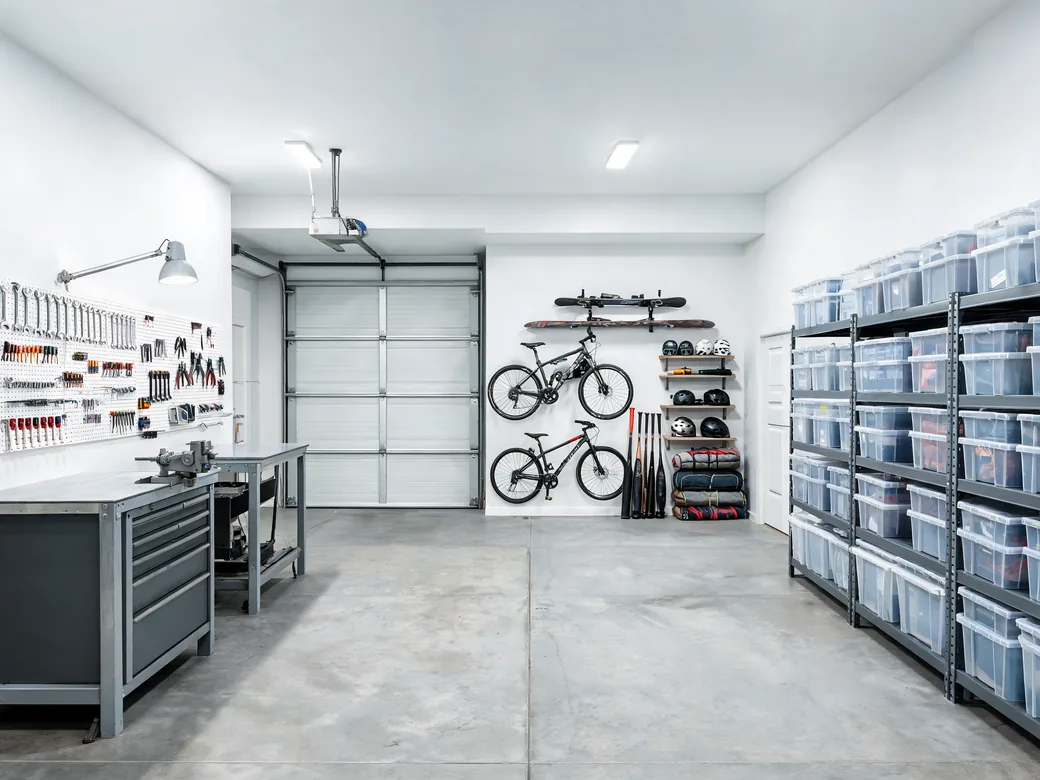
How to Zone a Florida Garage
Five zones most Northeast Florida garages need — and why heat and humidity should decide which wall gets what.
Read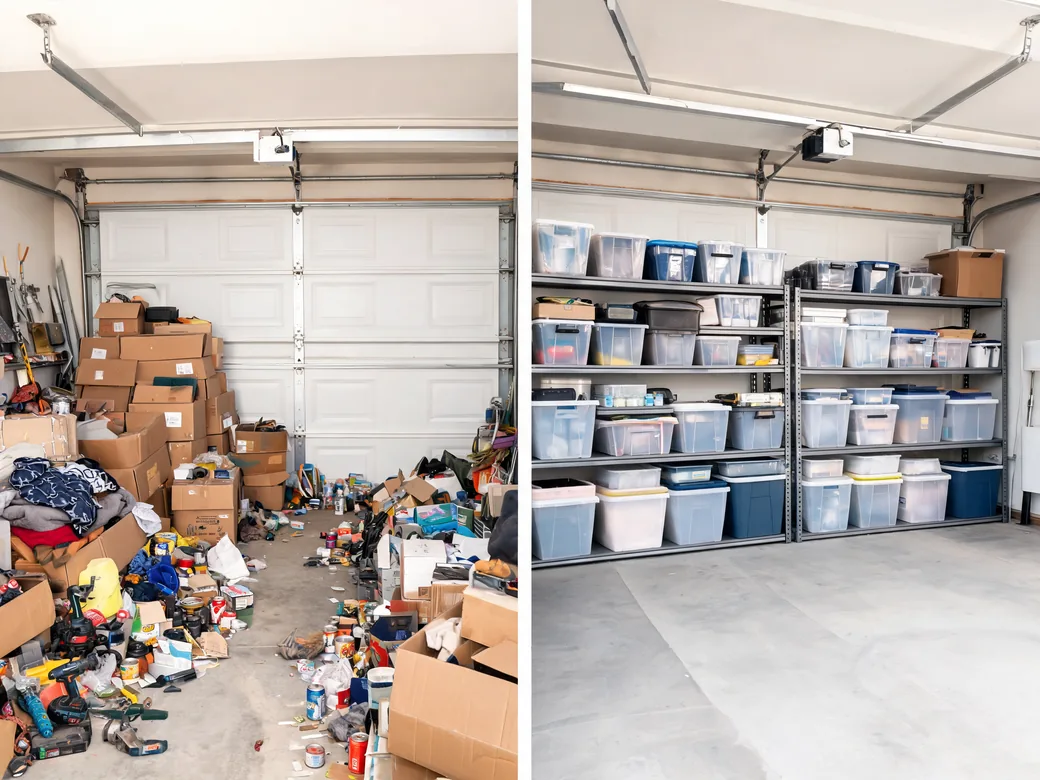
What Actually Changes in a One-Day Garage Transformation
An honest hour-by-hour account of what fits into a single day — and what before-and-after photos never show.
ReadWant it done for you?
Free on-site estimate anywhere in St. Johns, Duval, Clay and Flagler Counties, with a fixed scope and price before any work starts.