Why Labels Peel in Florida Garages — and How to Label Bins So They Don’t
Labeling is what makes an organized garage survive other people using it. In Northeast Florida it is also the part most likely to fail within a year, and the reason is physical rather than a matter of effort.
Why the adhesive gives up
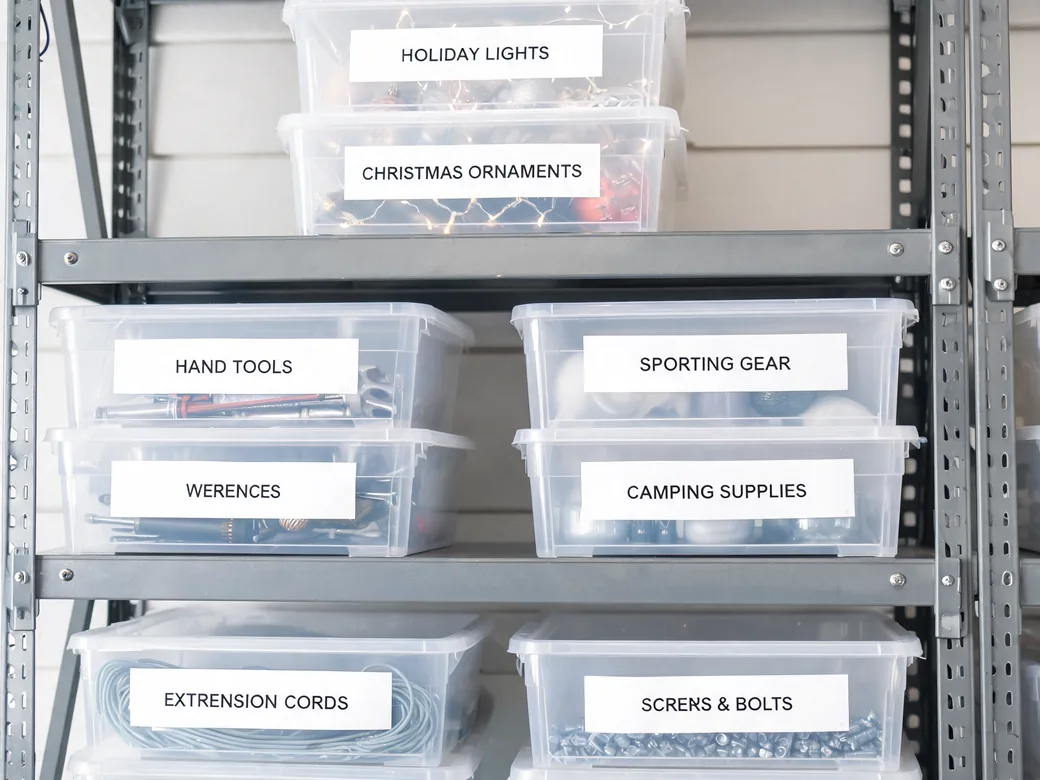
Pressure-sensitive adhesive — the kind on almost every printed label, sticker sheet and label-maker tape — relies on a stable, dry surface to bond to. A Florida garage provides neither.
Two things work against it. Heat softens the adhesive, and an unconditioned garage here spends much of the year well above the temperature at which consumer-grade adhesive is designed to hold. Then humidity puts a thin film of condensation on the bin as the room cools overnight, and the bond releases from the surface it was holding.
Do both to a label a few hundred times across a summer and the corner lifts, then the edge, then it is on the floor. It is not that the label was cheap. It is that the room cycles.
Cardboard fails here for the same reason
The same physics ruins the containers, not just the labels. Cardboard boxes in a humid garage absorb moisture from the air, soften, sag and eventually collapse — usually from the bottom, usually while being lifted, usually holding something breakable.
This is why we move people to rigid plastic bins as a matter of course rather than as an upsell. In this climate a cardboard box is a temporary container regardless of what is in it, and a garage full of them is a garage that will need doing again. That holds inland as much as on the coast — the older housing stock we work in around Mandarin and Orange Park included.
What actually holds
- Clean the surface first. Bins collect a fine dust-and-humidity film that defeats adhesive before it starts. A quick wipe with rubbing alcohol and a genuinely dry surface roughly doubles the life of any label.
- Label the lid and the short end. The lid is for when bins are on the floor; the end is for when they are shelved. Labeling only the lid guarantees you will be reading the wrong face for the rest of the bin’s life.
- Prefer mechanical over adhesive where you can. A label slipped into a clip-on holder, a tag zip-tied to the handle, or a paint pen written directly on the bin cannot peel because nothing is holding it on.
- Laminate or use vinyl, not paper. Paper labels wick moisture and the ink runs. Vinyl or a laminated insert survives.
- Avoid the sun-facing wall for labeled storage. UV fades printed labels quickly, and near the coast — in Ponte Vedra Beach and Atlantic Beach especially — it compounds with salt air. Reserve that wall for things that do not need reading.
Label by category, not by contents
This matters more than the material and costs nothing. A bin labeled “Christmas lights, tree stand, spare bulbs, stockings” is wrong the first time anything moves. A bin labeled “Holiday” stays correct for years.
The reason is that a label is not an inventory, it is an address. Its job is to tell someone who did not pack the bin where a thing belongs. Categories do that; contents lists just go stale and then get ignored, which is the same as having no label at all.
Keep categories broad enough that they survive change and narrow enough to be useful: Holiday, Camping, Auto, Paint & Hardware, Kids’ Sports. If you need to open two bins occasionally, that is a much smaller cost than a labeling scheme nobody maintains.
Labels are the last step, not the first
Labeling an unzoned garage produces a well-documented mess. The labels are only doing useful work once each category has one obvious home — at which point the label tells people where that home is, and the system survives someone else putting things away.
If the zoning is not there yet, start with how to zone a Florida garage. If you would rather not do it yourself, labeling of existing bins is included in The Pack Organizer, and a premium bin package is available where the existing containers are not worth keeping.
Labeling of existing bins is included in these packages, alongside the zoning that makes the labels worth having.
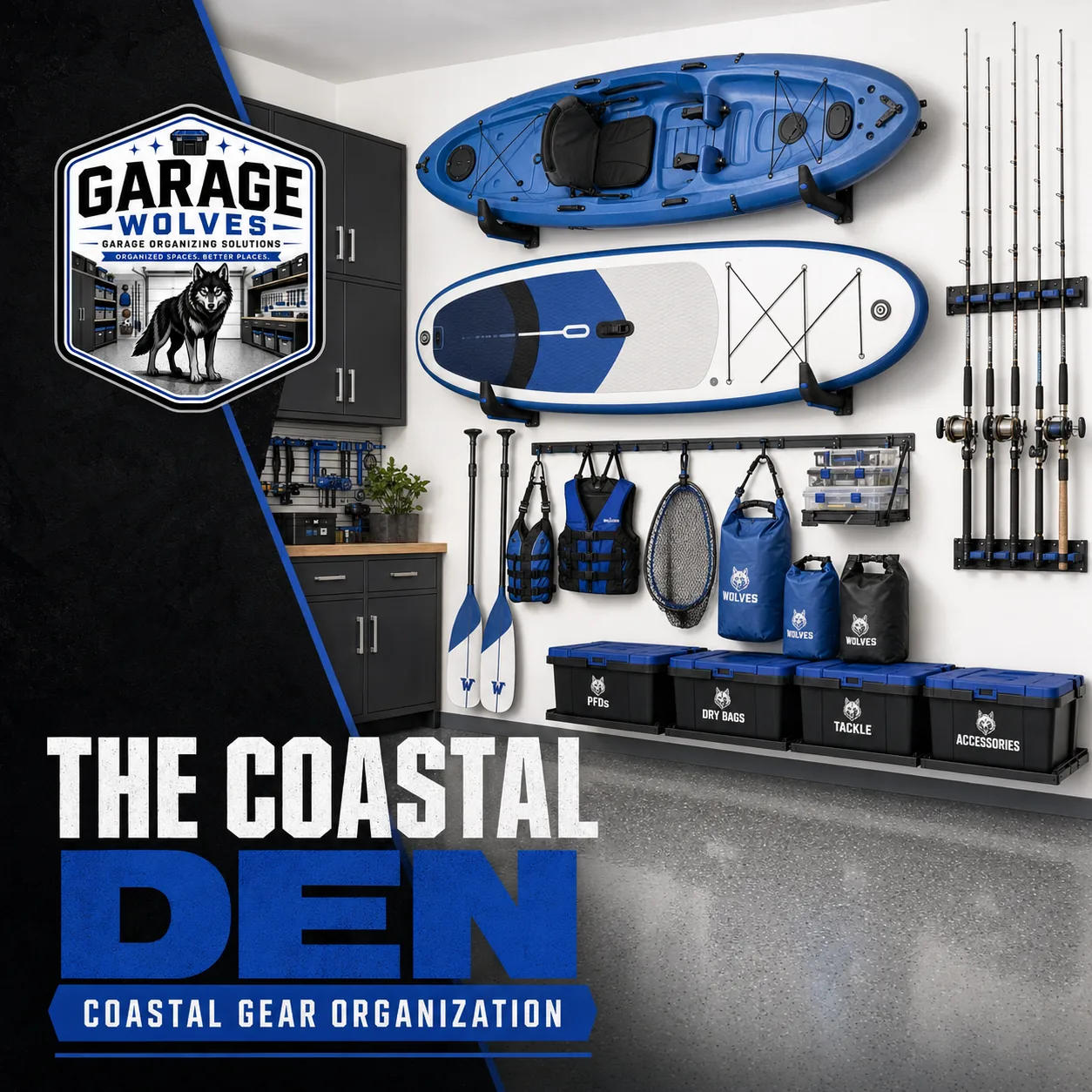
Fishing, kayak and paddleboard gear zoned and stored off the floor.
A fast, judgment-free reset for a lightly cluttered garage.
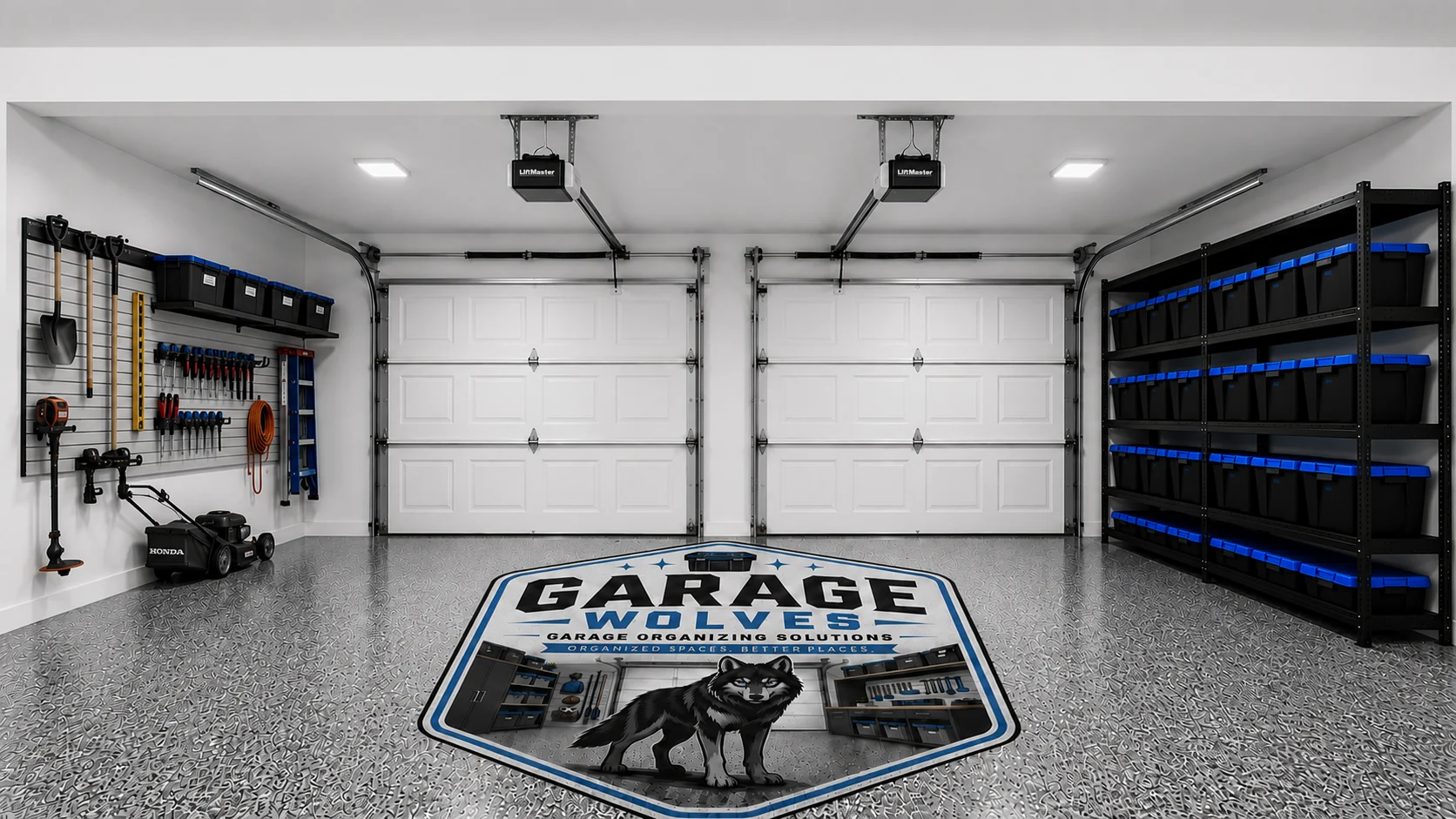
Full zoning, layout and labeling for busy family garages.
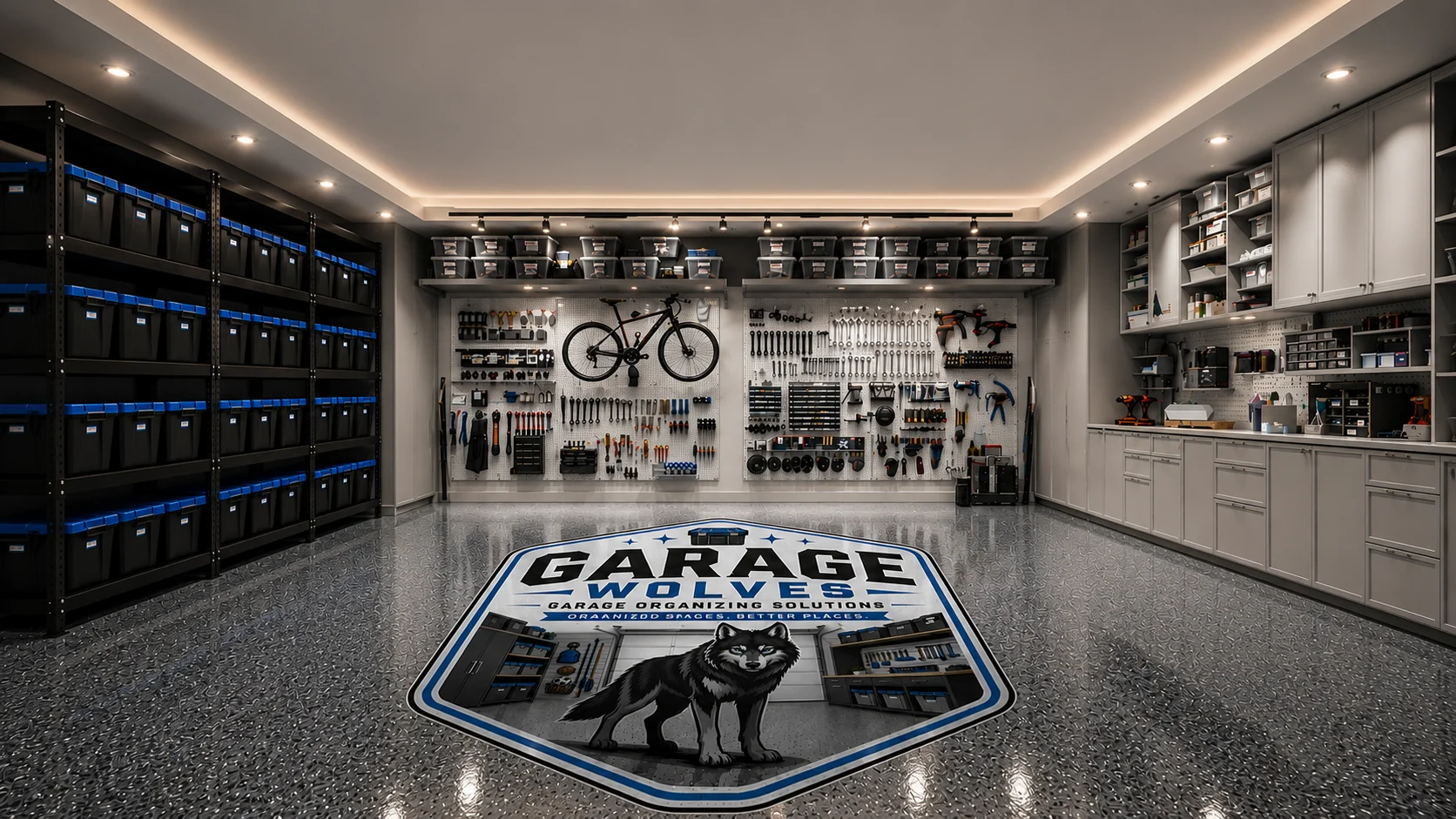
Complete overhaul — custom layout, wall and ceiling racks, premium bins.
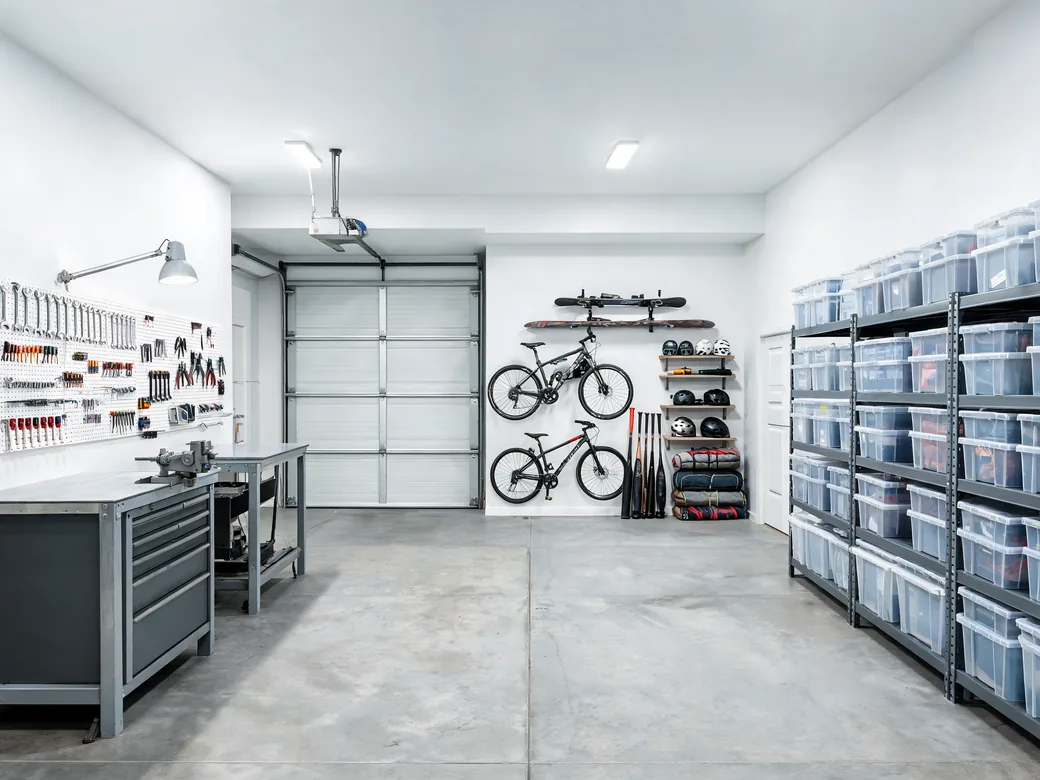
How to Zone a Florida Garage
Five zones most Northeast Florida garages need — and why heat and humidity should decide which wall gets what.
Read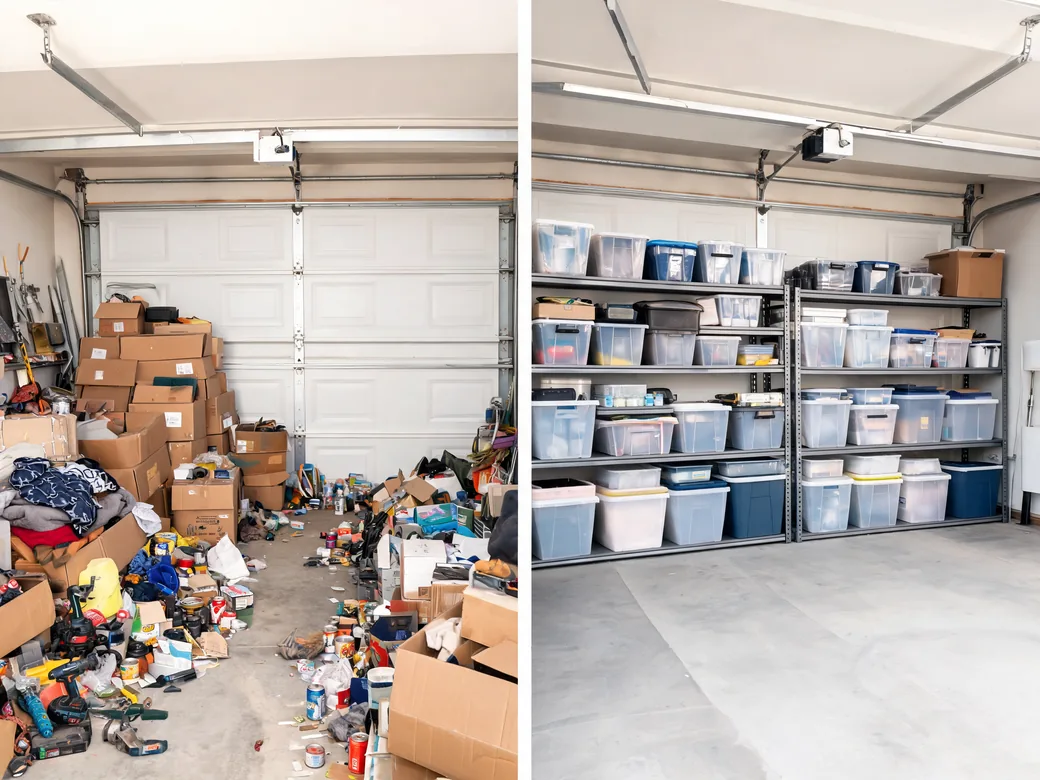
What Actually Changes in a One-Day Garage Transformation
An honest hour-by-hour account of what fits into a single day — and what before-and-after photos never show.
ReadWant it done for you?
Free on-site estimate anywhere in St. Johns, Duval, Clay and Flagler Counties, with a fixed scope and price before any work starts.